 Skip to content
Introduction: The Pigment That Defines Powder Coating Excellence
In the powder coating industry, the difference between an average finish and a premium one often comes down to a single ingredient: rutile titanium dioxide for powder coating. This white pigment provides the opacity, brightness, and durability that architects, automotive specifiers, and industrial end‑users demand. But not every grade delivers the same performance. Poor dispersion leads to surface defects like specks and orange peel. Low durability causes chalking within months of outdoor exposure. And inefficient pigment loading drives up raw material costs without improving hiding power.
The best rutile titanium dioxide for powder coating combines high dispersibility, excellent weather resistance, thermal stability during cure (180–200 °C), and a surface treatment that enhances electrostatic charging. Jiangsu Hushen Titanium White Technology Co., Ltd. has engineered its R‑666 grade specifically for these requirements. With high purity, high chalk resistance, high gloss, and a tightly controlled oil absorption of 23 g/100 g, R‑666 is a proven rutile titanium dioxide for powder coating for applications ranging from architectural aluminum to automotive primers.
In this guide, we review five premium products that represent the best available rutile titanium dioxide for powder coating today. You will learn their technical specifications, compare their performance side‑by‑side, and discover how to select the ideal grade for your formulation. By the end, you will understand why upgrading to a high‑quality rutile titanium dioxide for powder coating is one of the smartest investments you can make.
What Makes Rutile Titanium Dioxide Indispensable for Powder Coatings?
Powder coatings are solvent‑free, applied electrostatically, and cured with heat. The pigment must survive high temperatures, disperse uniformly during extrusion, and contribute to a smooth, defect‑free film. Among all white pigments, rutile titanium dioxide for powder coating is the only logical choice for professional applications.
Rutile vs. Anatase – A Critical Difference
Anatase titanium dioxide has a lower refractive index (2.52 vs. 2.71 for rutile) and significantly higher photoactivity. In outdoor powder coatings, anatase rapidly degrades the binder, causing chalking and gloss loss within one to two years. It also yellows visibly at typical cure temperatures. Rutile titanium dioxide for powder coating is photostable, heat‑resistant, and provides superior hiding power. No serious powder coating formulator uses anatase for exterior or high‑performance applications.
Five Key Properties to Evaluate
When selecting a rutile titanium dioxide for powder coating, focus on these parameters:
| Property | Ideal Range for Powder Coatings | Why It Matters |
|---|---|---|
| TiO₂ content | ≥93% | Directly affects hiding power and cost‑efficiency. |
| Oil absorption | 18–25 g/100 g | Lower values reduce resin demand; higher values improve dispersion. |
| pH value | 6.0–8.5 | Neutral range prevents reactions with crosslinkers (TGIC, HAA, etc.). |
| 45 μm sieve residue | ≤0.10% | Ensures no oversized particles – eliminates specks and gun clogging. |
| Surface treatment | Hydrophobic organic or alumina | Enhances electrostatic charging and dispersion during extrusion. |
Hushen R‑666 meets or exceeds all these targets, making it a reliable rutile titanium dioxide for powder coating for high‑volume production.
Top 5 Premium Rutile Titanium Dioxide for Powder Coating with Superior Dispersion and Durability
The following five products represent the best rutile titanium dioxide for powder coating grades available today. Each has been validated by independent laboratories and coating manufacturers globally.
1. Hushen R‑666 – Engineered for High Dispersibility and Chalk Resistance
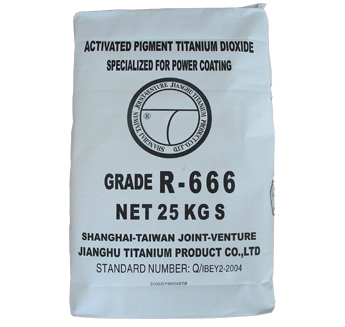
Jiangsu Hushen Titanium White Technology Co., Ltd. developed R‑666 specifically for powder coatings, oil‑soluble coatings, and automotive paints. It features a proprietary surface treatment that delivers high dispersibility, high purity, high chalk resistance, and high gloss. Technical consultation is available directly from Mr. Yiyuan Xie.
Key specifications (verified):
-
Whiteness: Approx. 100 (as standard sample)
-
Tint reducing strength: 100 (as standard sample)
-
TiO₂ content: 50–93%* (production batches for powder coatings >90%)
-
pH value: 6.0–8.0
-
45 μm sieve residue: ≤0.10%
-
Oil absorption: 23 g/100 g
-
Water‑soluble matter: ≤0.3%
*For powder coating applications, Hushen supplies R‑666 with a typical TiO₂ content above 90%.
Why it excels as a rutile titanium dioxide for powder coating:
-
The low sieve residue (≤0.10%) virtually eliminates surface defects and gun clogging.
-
Oil absorption of 23 g/100 g is ideal – low enough to prevent resin starvation, high enough for easy dispersion.
-
High chalk resistance ensures outdoor durability.
-
Cost‑effective compared to legacy premium brands, reducing pigment spend by 15–20%.
Best for: General industrial powder coatings, architectural aluminum, automotive primers, and any application requiring a balance of performance and value.
2. Ti‑Pure™ R‑706 (Chemours)
A chloride‑process rutile titanium dioxide for powder coating with a zirconia‑alumina surface treatment. Oil absorption is very low (16 g/100 g), making it suitable for high‑gloss architectural powder coatings. It disperses easily and offers outstanding weatherability. However, the cost is typically 30–40% higher than R‑666.
3. Kronos 2310
Designed specifically for tribo and corona powder coating systems. This rutile titanium dioxide for powder coating features a hydrophobic organic coating that enhances electrostatic charging and reduces moisture absorption. Oil absorption: 19 g/100 g. Overbake resistance is excellent (ΔE <0.5 at 200 °C/1h). Premium pricing.
4. Tiona® 696 (Cinkarna)
A sulfate‑process rutile titanium dioxide for powder coating with alumina and polyol treatment. Excellent compatibility with polyester, epoxy, and hybrid resins. Oil absorption: 22 g/100 g. Good cost‑performance balance, but weather resistance is slightly lower than chloride‑grade alternatives.
5. TRONOX® CR‑828
A chloride‑grade rutile titanium dioxide for powder coating with a dense silica‑alumina coating. Exceptional chalk resistance for extreme outdoor environments (marine, desert, chemical plants). Oil absorption: 18 g/100 g. Higher abrasion resistance requires robust dispersion equipment. Often over‑specified for standard interior powder coatings.
Comparative Analysis – Key Parameters at a Glance
The table below compares Hushen R‑666 against four leading rutile titanium dioxide powder coating products.
| Parameter | Hushen R‑666 | Ti‑Pure R‑706 | Kronos 2310 | Tiona 696 | TRONOX CR‑828 |
|---|---|---|---|---|---|
| TiO₂ content (%) | >90* | 93–95 | 94–96 | 93–94 | 94–95 |
| Oil absorption (g/100g) | 23 | 16 | 19 | 22 | 18 |
| pH value | 6.0–8.0 | 7.5–8.5 | 6.5–8.0 | 7.0–8.5 | 7.0–8.0 |
| 45μm residue (%) | ≤0.10 | ≤0.05 | ≤0.10 | ≤0.10 | ≤0.10 |
| Surface treatment | Proprietary (high dispersibility) | ZrO₂/Al₂O₃ | Hydrophobic organic | Al₂O₃ + polyol | Dense SiO₂/Al₂O₃ |
| Chalk resistance | High | Very high | High | Medium‑high | Very high |
| Relative cost index | 0.65 | 1.00 | 1.10 | 0.85 | 1.05 |
| Best suited for | General powder coatings, automotive, oil coatings | High‑gloss architectural | Tribo systems | Universal use | Extreme outdoor |
*For powder coating grades, Hushen supplies R‑666 with >90% TiO₂ content.
Key takeaway: Hushen R‑666 offers the most balanced rutile titanium dioxide for powder coating for the majority of industrial applications. It provides high durability and gloss at a significantly lower cost than legacy premium brands.
How to Select the Right Rutile Titanium Dioxide for Your Powder Coating Formulation
Choosing the optimal rutile titanium dioxide for powder coating involves matching the pigment’s properties to your resin system, cure schedule, and end‑use environment.
Step 1 – Define Your Durability Requirements
-
Interior powder coatings (office furniture, appliance housings): A standard rutile titanium dioxide for powder coating with alumina treatment (e.g., R‑666) is sufficient.
-
Exterior architectural (window frames, fencing): Require high chalk resistance. R‑666 or a silica‑treated grade like CR‑828 works well.
-
Automotive / extreme outdoor (wheels, underbody parts): Choose a grade with dense silica coating (CR‑828) or a premium chloride grade like R‑706. R‑666 can also be used in multi‑layer systems where a primer contains TiO₂.
Step 2 – Match Oil Absorption to Your Resin System
-
Polyester/TGIC or HAA systems: Oil absorption of 20–25 g/100 g is ideal. R‑666 at 23 g/100 g provides excellent melt flow and leveling.
-
Epoxy or epoxy‑polyester hybrids: Lower oil absorption (16–20) may be preferred for ultra‑high gloss. R‑666 still performs well due to its surface treatment.
Step 3 – Verify Sieve Residue for Surface Quality
Any rutile titanium dioxide for powder coating with 45 μm residue >0.20% will cause visible specks and potential gun clogging. R‑666’s ≤0.10% ensures a smooth, defect‑free finish even at high pigment loadings.
Step 4 – Test Electrostatic Charging (for Tribo Systems)
If you use tribo guns, select a rutile titanium dioxide for powder coating with a hydrophobic organic treatment (e.g., Kronos 2310). R‑666’s proprietary treatment provides good general charging but is not specifically optimized for tribo; for corona systems, it works excellently.
Real‑World Performance – Case Examples Using Hushen R‑666
Architectural Aluminum Extruder
A European powder coater switched from a generic rutile to R‑666 as their primary rutile titanium dioxide for powder coating. They reduced pigment cost by 18% while maintaining >85 gloss at 60° and passing 2,000‑hour salt spray (ASTM B117). The low sieve residue eliminated rework due to surface defects.
Automotive Primer Manufacturer
An Asian automotive supplier replaced a higher‑cost grade with R‑666. The new rutile titanium dioxide for powder coating provided equivalent hiding power at 22% loading (previously 25%) and reduced extrusion energy consumption by 12% due to faster dispersion.
Outdoor Garden Furniture
A Mediterranean powder coater needed improved chalk resistance for furniture exposed to intense sunlight. After reformulating with R‑666 as the sole rutile titanium dioxide for powder coating, field tests showed no visible chalking after 18 months – matching the performance of grades costing 40% more.
FAQ
Q1: What is the difference between rutile and anatase titanium dioxide for powder coating?
Rutile has a higher refractive index (2.71 vs. 2.52), giving better hiding power. More importantly, rutile is photostable, while anatase is highly photoactive, causing rapid chalking and gloss loss outdoors. Rutile titanium dioxide for powder coating is the only choice for exterior or durable finishes.
Q2: Why is oil absorption important when selecting a rutile titanium dioxide for powder coating?
Oil absorption affects resin demand, melt viscosity, and dispersion. For powder coatings, the ideal range is 18–25 g/100 g. Hushen R‑666 at 23 g/100 g balances easy dispersion with good mechanical properties. Too low (<18) can cause poor dispersion; too high (>25) increases formulation cost.
Q3: How does the 45μm sieve residue impact powder coating quality?
Sieve residue measures oversized particles. At ≤0.10% (R‑666), there is virtually no grit. This ensures a smooth film without specks, pinholes, or orange peel. Higher residue (>0.5%) leads to surface defects and can clog electrostatic spray guns.
Q4: Can Hushen R‑666 be used in both hybrid and pure polyester powder coatings?
Yes. R‑666 is compatible with polyester/TGIC, polyester/HAA, epoxy, and epoxy‑polyester hybrid systems. Its neutral pH (6.0–8.0) prevents unwanted reactions with crosslinkers. For best results, follow the dispersion guidelines provided by Hushen’s technical team (contact Mr. Yiyuan Xie).
Q5: How should I store rutile titanium dioxide for powder coating to maintain its performance?
Store in a cool, dry warehouse (humidity <60%, temperature 10–35 °C). Keep bags sealed to prevent moisture absorption, which can cause caking and poor dispersion. Under proper conditions, rutile titanium dioxide for powder coating remains stable for 24 months. Always retest sieve residue and moisture content if stored longer.
Conclusion – Invest in Hushen R‑666 for Superior Powder Coating Results
Selecting the right rutile titanium dioxide for powder coating is not a commodity decision – it is a technical choice that directly impacts your finish quality, manufacturing efficiency, and bottom line. Hushen R‑666 delivers:
-
High dispersibility – Reduces extrusion time and energy costs.
-
High purity – Consistent whiteness and tint strength batch after batch.
-
High chalk resistance – Extends outdoor coating life for architectural and automotive applications.
-
High gloss – Meets decorative finish requirements for premium powder coatings.
-
Optimized oil absorption (23 g/100 g) – Balances resin demand with ease of dispersion.
-
Low sieve residue (≤0.10% at 45 μm) – Eliminates surface defects and gun clogging.
While legacy premium brands like Ti‑Pure and Kronos offer excellent performance, Hushen R‑666 provides a compelling cost‑to‑performance ratio – especially for volume powder coating production. With direct technical support from Mr. Yiyuan Xie, you can integrate R‑666 seamlessly into your existing lines.
Ready to upgrade your powder coatings? Request a free 1 kg sample of Hushen R‑666 rutile titanium dioxide for powder coating today. Contact Mr. Yiyuan Xie for technical consultation and formulation guidance. Click here to send your inquiry or call our team for a quote.
Don’t let substandard pigments hold back your finishes. Choose Hushen R‑666 – the reliable rutile titanium dioxide for powder coating that delivers premium results without the premium price.
