 Zum Inhalt springen
Einführung
White is never just white. In paints, coatings, plastics, inks, and cosmetics, whiteness directly affects product quality, appearance, and user satisfaction. Titanium dioxide (TiO₂), valued at over USD 22 billion globally in 2025, is the most widely used white pigment. But performance varies significantly by grade.
Micrometer titanium dioxide, with particles typically in the 0.2–0.4 micron range, is engineered to achieve an optimal balance of light scattering efficiency, dispersion stability, and application versatility. This article explains why this particle size range delivers superior whiteness and what to consider when selecting the right TiO₂ for your application.
What Makes Micrometer Titanium Dioxide the Optimal Choice for Whiteness?
The Science of Light Scattering
Whiteness and opacity in titanium dioxide come down to one fundamental principle: light scattering. Unlike coloured pigments that absorb specific wavelengths of visible light, titanium dioxide scatters light. When light hits a TiO₂ particle, the particle bends and redirects that light in multiple directions. The more efficiently a pigment scatters visible light, the whiter and more opaque the final product appears.
The scattering efficiency of titanium dioxide is directly tied to its refractive index—a measure of how much the material bends light. Rutile titanium dioxide, the crystal form used in premium micrometer titanium dioxide products, has a refractive index of approximately 2.7 to 2.73 in the visible spectrum. This is the highest refractive index of any white pigment available commercially, making TiO₂ the most effective light scatterer in existence.
The Particle Size Sweet Spot
Here is where micrometer titanium dioxide proves its superiority. Light scattering efficiency is not simply a matter of having more pigment—it is about having particles of the right size. Scientific research has established that for rutile titanium dioxide, the optimum particle diameter for maximum visible light scattering is approximately 0.2 to 0.3 micrometres. At this size, particles scatter light most efficiently across the visible spectrum (wavelengths of approximately 380 to 700 nanometres).
A micrometer titanium dioxide product with particle sizes in the 0.22 to 0.42 micron range hits this optical sweet spot precisely. Particles that are too small—in the nanometre range—scatter shorter wavelengths (UV light) more effectively than visible light, making them better suited for UV absorption than for achieving whiteness. Particles that are too large lose scattering efficiency rapidly as size increases. The micrometer range, therefore, represents the Goldilocks zone for whiteness and opacity.
Particle Size Distribution Matters
Beyond average particle size, the distribution of particle sizes within a micrometer titanium dioxide product significantly impacts performance. To achieve optimum scattering in the visible range, it is important to obtain a narrow particle size distribution, with the majority of particles concentrated between 0.2 μm and 0.4 μm. A narrow particle size distribution ensures that the majority of particles fall within the optimal scattering range, maximising efficiency and minimising waste. Wide distributions containing both undersized and oversized particles reduce overall opacity and can create inconsistencies in whiteness across batches.
Quantifying the Optical Advantage
The scattering performance of micrometer titanium dioxide can be quantified through Mie scattering theory. For rutile TiO₂ particles of approximately 0.22 μm diameter suspended in a clear binder with refractive index 1.5, the angle-weighted scattering coefficient is estimated at 12 μm⁻¹ for the centre of the visible spectrum at 550 nm. This theoretical foundation confirms what formulators have long observed in practice: micrometer titanium dioxide delivers the highest possible opacity per unit of pigment loading, making it the most efficient choice for achieving superior whiteness.

How Does Advanced Surface Treatment Enhance Micrometer Titanium Dioxide Performance?
The Challenge of Agglomeration
One of the persistent challenges with micrometer titanium dioxide is the tendency for particles to agglomerate—clumping together into larger, less effective masses. Agglomeration reduces the effective surface area available for light scattering and creates visible defects in final products. This is where advanced surface treatment technology becomes essential.
Creating a Protective Interfacial Film
To address agglomeration, manufacturers like Jiangsu Hushen Titanium White Technology Co., Ltd. employ first-class surface treatment and dispersion technologies. These processes create a complete and strong interfacial film coating on the surfaces of micrometer-sized titanium dioxide particles.
This interfacial film serves multiple critical functions:
-
Prevents agglomeration by creating physical and chemical barriers between particles
-
Maintains stable dispersion within product systems over extended periods
-
Enhances compatibility with different resin systems and formulations
-
Improves weather resistance and durability in outdoor applications
The surface treatment can be tailored to make particles hydrophilic (water-loving) or lipophilic (oil-loving), depending on the intended application. Hydrophilic treatments are ideal for water-based paints and coatings, while lipophilic treatments perform better in solvent-based systems and plastics.
Surface Treatment in Industry Practice
In the pigment industry, surface treatment typically involves inorganic coatings such as alumina (Al₂O₃) and silica (SiO₂), as well as organic treatments applied during manufacture. Alumina treatments reduce contact between TiO₂ particles, resulting in excellent dispersion in various systems. Silica coatings promote photostability in coatings, improving chalk resistance and gloss retention in outdoor applications. These treatments are essential for ensuring that micrometer titanium dioxide performs consistently across different formulation environments.
Dispersion Stability: A Key Performance Indicator
A micrometer titanium dioxide product with superior surface treatment maintains permanent micron dispersion throughout the product’s lifecycle. This stability means manufacturers can achieve consistent whiteness and opacity without worrying about pigment settling, flocculation, or performance degradation over time. The dispersion stability of properly treated micrometer titanium dioxide is “only inferior to nanometer titanium dioxide”—a remarkable achievement given the different applications of these two grades.
Rutile vs. Anatase: Which Crystal Form Delivers Better White?
Understanding the Two Crystal Structures
Titanium dioxide exists in three crystal forms, but two dominate commercial applications: rutile and Anatas. Both are white powders, but their optical and physical properties differ significantly.
| Eigenschaften | Rutil-Titandioxid | Anatas-Titandioxid |
|---|---|---|
| Brechungsindex | ~2.73 | ~2.55 |
| Hiding Power | Superior | Mäßig |
| UV-Beständigkeit | Ausgezeichnet | Schlecht |
| Chalking Rate | Niedrig | Hoch |
| Typical Particle Size | 0.26–0.42 μm | 0.22–0.35 μm |
| Specific Surface Area | 50–80 m²/g | 20–30 m²/g |
| Primary Application | Paints, coatings, plastics, cosmetics | Rubber, paper, textiles |
Why Rutile Dominates the Market
The rutile-grade titanium dioxide segment held an 85.2% market share in 2025, and for good reason. Rutile’s higher refractive index means it scatters visible light more effectively than anatase, delivering superior hiding power and whiteness. This makes rutile micrometer titanium dioxide the preferred choice for applications where maximum opacity and brightness are required.
Anatase, while offering lower hiding power, provides unique benefits in certain applications. Its free-chalking and weathering properties deliver a self-cleaning white appearance in outdoor rubber and textile applications. However, for most industrial and consumer applications demanding the highest level of whiteness, rutile micrometer titanium dioxide is the clear winner.
Specific Surface Area and Performance
The product specifications reveal an interesting distinction: rutile micrometer titanium dioxide has a specific surface area of 50–80 m²/g, compared to 20–30 m²/g for anatase. This higher surface area in rutile products indicates more surface treatment capacity and potentially better interaction with surrounding media—another factor contributing to its superior performance in demanding applications.
The Chloride Process Advantage
The production process also influences pigment quality. The chloride process, which accounted for 61.1% of production in 2025, yields rutile pigments with a refractive index near 2.71 and uniform particle distribution that are favoured for demanding coating applications. This process converts high-purity feedstock into pigment through chlorination and oxidation at elevated temperatures, producing a narrower particle size distribution than the sulfate method. The result is a micrometer titanium dioxide product with superior gloss and tinting strength.
Where Is Micrometer Titanium Dioxide Used?
Paints and Coatings
The paints and coatings industry is the largest consumer of titanium dioxide, accounting for approximately 55% to 57% of global consumption. Micrometer titanium dioxide provides the whiteness, opacity, and brightness that architectural paints, automotive coatings, industrial finishes, and powder coatings demand. Its optimal particle size ensures that coatings achieve full hiding power at lower pigment volumes, reducing material costs and enabling thinner, more efficient coatings.
Kunststoffe
The plastics sector represents approximately 20% to 25% of titanium dioxide consumption. In plastics, micrometer titanium dioxide delivers whiteness and opacity while withstanding the high temperatures of extrusion and moulding processes. Rutile pigments for plastics typically have crystal sizes closely matching the optimal scattering range. The surface treatment of micrometer titanium dioxide ensures compatibility with various thermoplastic and thermosetting resins.
Paper
The paper industry accounts for roughly 9% to 13% of global TiO₂ consumption. Micrometer titanium dioxide provides high whiteness, excellent opacity, and good retention behaviour in paper pulp. These properties are essential for producing high-quality coated papers and specialty grades that demand superior brightness and printability.
Cosmetics and Personal Care
Micrometer titanium dioxide finds extensive application in cosmetics, where it provides high whiteness and opacity for skin tone correction and coverage enhancement. Its non-toxic nature and excellent chemical stability make it suitable for products ranging from foundations and sunscreens to powders and creams.
Food and Pharmaceutical Applications
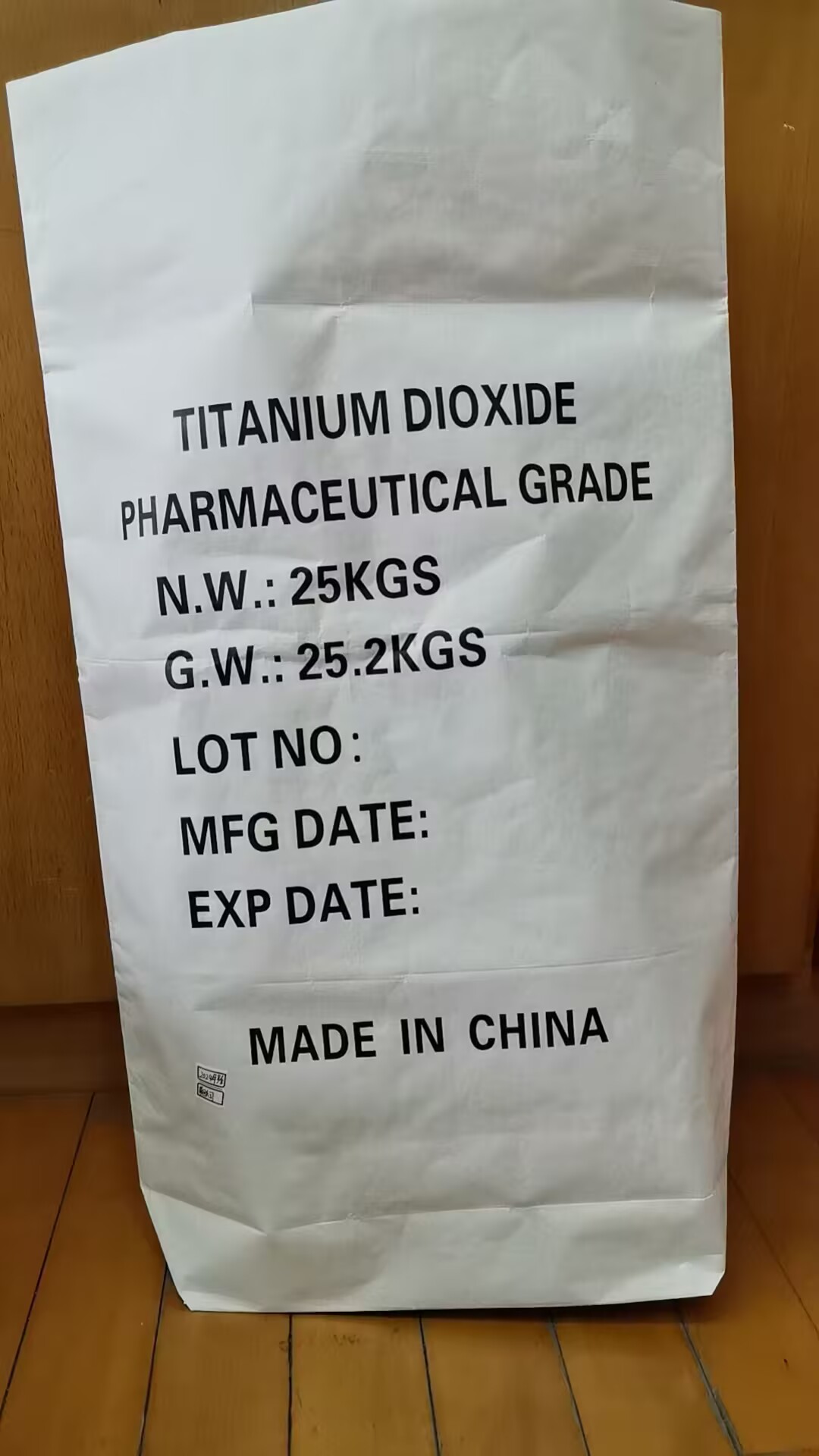
Beyond cosmetics, high-purity micrometer titanium dioxide can be used in high-grade foods and pharmaceutical applications. The heavy metal content is strictly controlled:
-
Lead (Pb): ≤0.0015%
-
Arsenic (As): ≤0.0008%
-
Mercury (Hg): ≤0.0001%
These low levels ensure compliance with global safety regulations for sensitive applications.
Inks, Textiles, and Other Applications
Printing inks benefit from the high-density whiteness and opacity of micrometer titanium dioxide, ensuring vibrant colour reproduction on dark or transparent substrates. Textile applications utilise TiO₂ for whitening fibres and providing UV protection. The pigment is also used in rubber, chemical fibres, porcelain enamel, optical glass, and capacitors. Together, inks, ceramics, and other applications account for approximately 10% of global consumption.
How Does Micrometer Titanium Dioxide Compare to Other White Pigments?
The TiO₂ Advantage
| White Pigment | Brechungsindex | Relative Hiding Power | Cost |
|---|---|---|---|
| Rutil TiO₂ | ~2.73 | 100 (baseline) | Höher |
| Anatas-TiO₂ | ~2.55 | ~70–80 | Mäßig |
| Zinkoxid | ~2.0 | ~20–30 | Unterer |
| Lithopone | ~1.8 | ~15–20 | Unterer |
| Kalziumkarbonat | ~1.6 | <10 (filler) | Niedrig |
No other white pigment comes close to rutile titanium dioxide’s refractive index or hiding power. Zinc oxide and lithopone, while cheaper, require significantly higher loadings to achieve comparable whiteness—often negating any cost advantage. This is why micrometer titanium dioxide remains the pigment of choice for applications demanding superior whiteness.
Micrometer vs. Nanometer: Different Tools for Different Jobs
The distinction between micrometer and nanometre titanium dioxide is not about one being “better”—it is about different applications requiring different particle sizes.
| Eigenschaften | Micrometer TiO₂ | Nanometer TiO₂ |
|---|---|---|
| Partikelgröße | 0.2–0.4 μm | <100 nm |
| Primäre Funktion | Visible light scattering (whiteness, opacity) | UV absorption |
| Aussehen | Opaque, white | Transparent or translucent |
| Applications | Paints, coatings, plastics, cosmetics, food | Sunscreens, UV-blocking coatings, self-cleaning surfaces |
Micrometer titanium dioxide is the workhorse for whiteness and opacity. Nanometer titanium dioxide, by contrast, is used primarily as a UV absorber in sunscreens and transparent coatings. Choosing the right grade depends entirely on the desired outcome: whiteness or UV protection.
What Should You Look for When Selecting Micrometer Titanium Dioxide?
Purity and Heavy Metal Content
For applications in cosmetics, food, and pharmaceuticals, purity is paramount. The product specifications for high-quality micrometer titanium dioxide show heavy metal content well within safety limits:
-
Lead (Pb): ≤0.0015%
-
Arsenic (As): ≤0.0008%
-
Mercury (Hg): ≤0.0001%
These low levels ensure compliance with global safety regulations for sensitive applications.
Surface Treatment and Dispersibility
The surface treatment of micrometer titanium dioxide determines how well it disperses in your specific system. Look for products that offer:
-
Hydrophilic treatment for water-based formulations
-
Lipophilic treatment for solvent-based and plastic systems
-
High dispersion ratings for reduced processing time and energy consumption
Products with superior surface treatment, like those using advanced interfacial film coating technology, maintain stable dispersion and prevent agglomeration.
Crystal Form and Particle Size Distribution
Select rutile grade for maximum whiteness and durability; anatase may suffice for less demanding applications or where self-cleaning properties are desired. Verify that the particle size distribution is narrow and centred in the 0.2–0.3 micron range for optimal scattering efficiency.
Loss on Drying and Ignition
The product specifications for micrometer titanium dioxide show loss on drying at 1% and loss on ignition at 10%. Low loss on drying indicates minimal moisture content, which is essential for consistent performance in plastics and solvent-based systems. Loss on ignition reflects organic treatment levels and should be consistent across batches.
The Market Context: Why Titanium Dioxide Demand Continues to Grow
-
A Multi-Billion Dollar Market
The global titanium dioxide market was valued at approximately USD 22 billion in 2025 and is projected to reach USD 35.8 billion by 2035, growing at a compound annual growth rate of 4.9%. The rutile-grade segment, which includes most micrometer titanium dioxide products, held an 85.2% share in 2025 and is expected to grow at a CAGR of 5% from 2026 to 2035.
-
Rising Demand from Construction and Automotive Sectors
The primary drivers of this growth are rising demand from the construction sector (architectural paints and coatings) and the automotive industry (durable, high-performance finishes). As urbanisation continues and infrastructure investment increases worldwide, the demand for high-quality micrometer titanium dioxide will only intensify.
-
Sustainability and Efficiency Trends
Manufacturers are increasingly focused on using titanium dioxide more efficiently—achieving the same whiteness and opacity with lower pigment loadings. This trend favours micrometer titanium dioxide products with optimal particle size and advanced surface treatment, as they deliver maximum performance per unit of pigment. Efficient use of TiO₂ reduces waste, lowers material costs, and supports sustainability goals—choosing the right pigment grade is more critical than ever.
-
Niche Segments and Innovation
Niche segments, including application-specific surface treatments, are gaining momentum and supporting value growth that outpaces volume expansion in some areas. Producers are increasingly prioritising higher-value product grades and operational efficiency to reduce exposure to price volatility while maintaining competitiveness. This dynamic creates opportunities for manufacturers of premium micrometer titanium dioxide to differentiate their offerings through superior performance and tailored solutions.
Conclusion: The Clear Choice for Superior Whiteness
When superior whiteness, opacity, and consistency matter, micrometer titanium dioxide remains one of the most effective pigment solutions available. Its optimized particle size, excellent light-scattering performance, and advanced surface treatment help deliver brighter, cleaner, and longer-lasting results across a wide range of applications.
From coatings and plastics to cosmetics and specialty papers, the right micrometer titanium dioxide can significantly improve product appearance and performance. Combined with the durability and high refractive index of rutile crystal structures, micrometer titanium dioxide offers an ideal balance of efficiency, stability, and versatility.
If you’re evaluating micrometer titanium dioxide for your next formulation, our technical team can help you select the most suitable grade based on your performance requirements. Contact us today for product samples, specifications, and expert application support.
