 コンテンツへスキップ
要旨
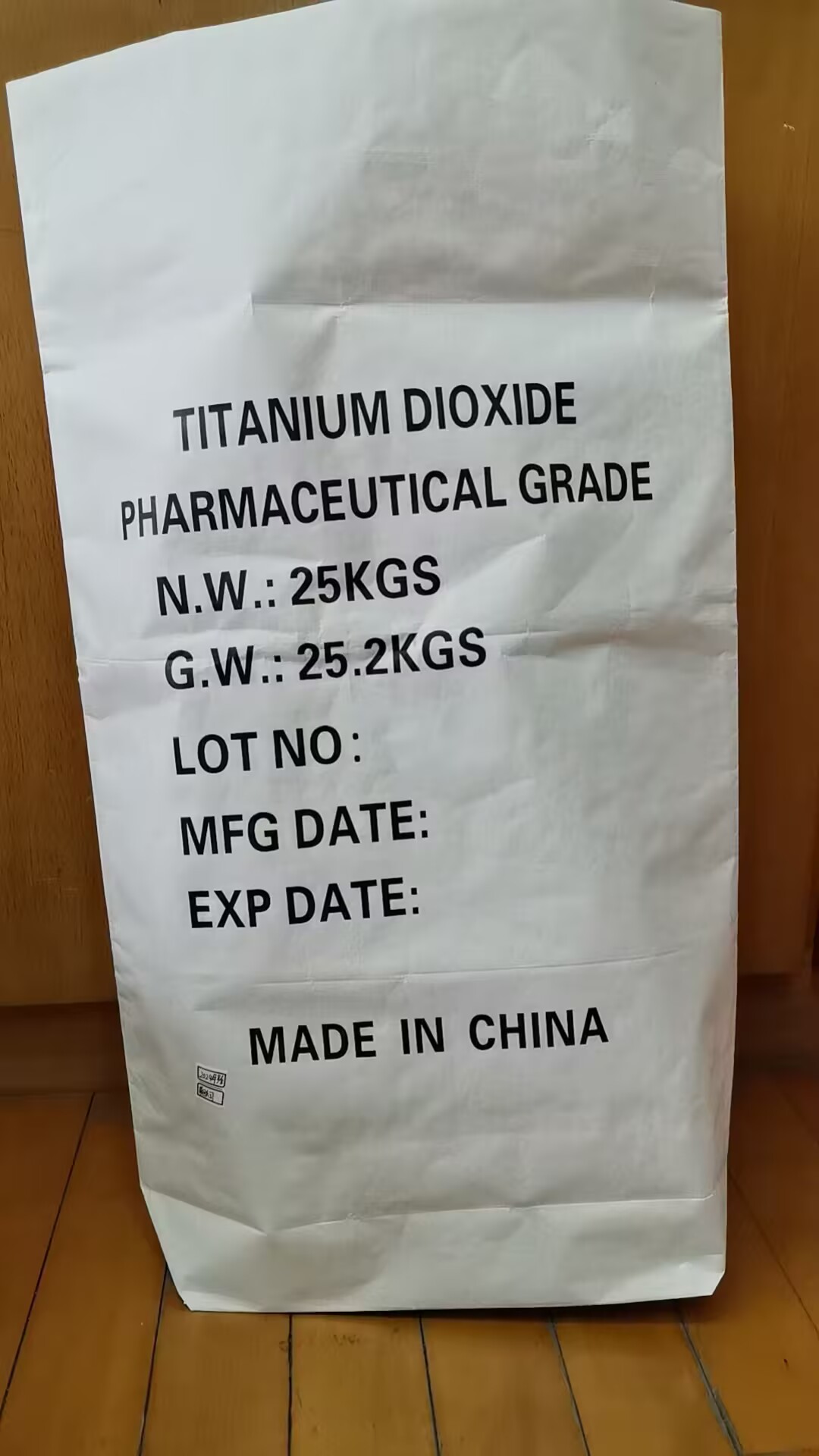
医薬品グレードの二酸化チタン (TiO₂)は医薬品製剤における重要な賦形剤であり、食品グレードや工業グレードと比較して、優れた純度、厳格な品質管理、規制遵守を提供する。この記事では、錠剤コーティング、カプセル不透明化、および放出制御システムでの使用に関する技術的な違い、規制要件、および商業的な考慮事項について概説する。.
色素沈着だけでなく、医薬品グレードのTiO₂は感光性原薬の光バリアとして機能し、耐湿性を向上させ、バッチ間で一貫した色を保証します。標準グレードとの違いを理解することで、調達・製剤チームは、コスト、規制リスク、製品品質、患者安全のバランスを考慮した、情報に基づいた調達決定を行うことができます。.
純度基準と組成の違い
医薬品と食品グレードの比較:重金属規制値と不純物プロファイル
医薬品グレードの二酸化チタンと食品グレードの二酸化チタンの主な違いは、重金属汚染の閾値と不純物管理プロトコルにあります。医薬品グレードの二酸化チタンはUSP Elemental ImpurityとEuropean Pharmacopoeia (EP) 2.4.8規格に準拠しなければなりません。.
主要重金属規制値の比較:
- ヒ素製薬グレードの二酸化チタンは3ppm以下、食品グレードは10ppm以下。
- リード医薬品グレードの二酸化チタンでは5ppm以下、食品グレードの二酸化チタンでは10-15ppm以下。
- 水銀とカドミウム:医薬品用途に求められる1ppm以下のレベル
重金属以外にも、製薬グレードの二酸化チタンは、有機不純物、残留溶媒、微生物汚染について厳格なテストを受けています。食品グレードの二酸化チタンは、主にカラーインデックス純度と基本的な汚染物質の不在に焦点を当て、医薬品賦形剤に必要な包括的な不純物プロファイリングが欠けています。この違いは非経口製剤や小児用医薬品では特に重要で、微量の汚染物質でも副作用の引き金になったり、規制上の失敗につながったりする可能性がある。.
医薬品グレードの二酸化チタンはまた、より制御された結晶構造を特徴としています。これは、混合相を含む可能性のある食品グレードの材料と比較して、より優れた光学特性と化学的安定性を保証します。.

粒度分布と表面処理要件
医薬品用途では、コーティング懸濁液中での均一な分散と予測可能な光学濃度を確保するため、精密な粒度制御が要求されます。.
医薬品グレードの二酸化チタン 通常、提供される:
- D50(メジアン粒子径):0.2-0.5 μm
- タイトな分布曲線(D90/D10比<3.0)
- 優れた凝集防止および沈降防止特性
対照的に、食品グレードのTiO₂は粗い粒子(D50>1.0μm)を使用することが多く、食品には適しているが、粒子径がコーティングの均一性と溶解速度に直接影響する薄膜医薬品コーティングには不適切である。.
表面処理はもう一つの重要な差別化要因です。医薬品グレードの二酸化チタンは特殊なアルミナとシリカのコーティングを受けます(通常2-4% w/w)。これらのコーティングは
- 幅広いpH変動に対して粒子表面を安定化させる
- 敏感な原薬を分解する可能性のある光触媒活性を防ぐ
- 水系および有機系コーティングシステムにおける分散性の向上
- HPMC、PVA、エチルセルロースなどのポリマーとの相溶性向上
食品グレードの材料には通常、このような高度な表面処理が施されていないため、相溶性の問題や製剤安定性の低下につながる可能性がある。.
| パラメータ | 医薬品グレード | 食品グレード | 工業用グレード |
|---|---|---|---|
| 純度(TiO₂含有量) | ≥99.0%以上 | ≥98.0% | ≥92.0% |
| ヒ素(ppm) | ≤3 | ≤10 | 特になし |
| 鉛 (ppm) | ≤5 | ≤10-15 | ≤50 |
| 水銀(ppm) | ≤1 | ≤3 | 特になし |
| 粒子径 D50 (μm) | 0.2-0.5 | 0.8-1.5 | 1.0-5.0 |
| 表面処理 | アルミナ/シリカ(医薬品グレード) | オプション | 工業用塗料 |
| 適用規格 | USP〈232〉、EP 2.4.8、JP XVII | FDA 21 CFR 73.575 | ASTM D476 |
| 微生物限界 | Total aerobic count <100 CFU/g | <1000 CFU/g | 特になし |
Regulatory Compliance and Documentation Requirements
Pharmacopeial Monographs: USP, EP, and JP Alignment
医薬品グレードの二酸化チタン must meet monograph specifications across multiple pharmacopeias to support global drug registration. The United States Pharmacopeia (USP) monograph defines identity tests (X-ray diffraction, infrared spectroscopy), purity requirements, and elemental impurity limits aligned with ICH Q3D guidelines. European Pharmacopoeia (EP) and Japanese Pharmacopoeia (JP) maintain harmonized yet not identical specifications, requiring suppliers to demonstrate full compliance across all relevant compendia.
Key Documentation Requirements for Pharmaceutical Grade Titanium Dioxide:
- Certificate of Analysis (CoA): Must include batch-specific test results for heavy metals, particle size distribution, loss on drying, pH of aqueous suspension, and microbial contamination. Each parameter should reference the test method used (USP, EP, or validated in-house method).
- Drug Master File (DMF): A Type II DMF filed with FDA, EMA, and PMDA provides confidential manufacturing details, quality control procedures, and stability data. Pharmaceutical buyers should always verify that the DMF is current and active.
- Batch Traceability Records: Full chain of custody from raw titanium ore sources through processing to final quality control testing.
Food grade materials typically offer simplified CoAs focused only on color index and basic purity, lacking the comprehensive documentation required for pharmaceutical applications.
GMP Manufacturing and Audit Trail Obligations
Good Manufacturing Practice (GMP) compliance is what truly distinguishes 医薬品グレードの二酸化チタン production from food or industrial operations. Manufacturers must operate under strict cGMP regulations, including 21 CFR Part 211 in the US and EudraLex Volume 4 in the EU.
Critical GMP Requirements Include:
- Environmental monitoring with HEPA filtration systems
- Personnel training and hygiene protocols
- Equipment qualification and cleaning validation
- Segregated production areas to prevent cross-contamination
- Robust change control and deviation management systems
Supplier qualification audits should thoroughly assess facility design, contamination control measures, and documented cleaning procedures. Facilities producing both pharmaceutical and industrial grades must demonstrate effective changeover protocols and residue testing.
Annual Product Quality Reviews (APQRs) are essential. These reviews aggregate data on critical quality attributes, out-of-specification events, and customer complaints. Pharmaceutical buyers should request APQR summaries to evaluate long-term manufacturing consistency.
Application-Specific Performance in Drug Formulation
Film Coating and Opacity Control in Solid Dosage Forms
医薬品グレードの二酸化チタン serves as the primary opacifying agent in film-coated tablets. It provides essential light protection for photosensitive APIs while enabling brand differentiation through precise color customization. Coating formulations typically incorporate 10-30% TiO₂ (w/w of dry polymer), depending on desired opacity, coating thickness, and substrate color.
Key Benefits in Film Coating:
- Superior light barrier protection for photosensitive drugs such as nifedipine, furosemide, and certain antibiotics
- Consistent batch-to-batch whiteness and tinting strength (measured by Lab* values)
- Excellent compatibility with common film-forming polymers like HPMC, PVA, and ethylcellulose
- Reduced nozzle clogging and improved suspension stability during spray coating
Food grade TiO₂ often leads to coating defects, inconsistent opacity, and batch rejection risks due to broader particle size distribution and lack of specialized surface treatment.
Capsule Shell Opacification and Moisture Barrier Enhancement
Hard gelatin and HPMC capsules widely use 医薬品グレードの二酸化チタン to protect light-sensitive or hygroscopic fill materials. Opaque capsule shells effectively prevent moisture ingress and premature API degradation.
Typical Usage and Advantages:
- TiO₂ concentration in capsule shells: 0.5-2.0% w/w
- Maintains capsule flexibility and prevents brittleness during handling
- Creates a dual barrier against light and moisture, extending shelf life
- Ensures non-interference with drug release and bioavailability (verified through USP <711> dissolution testing)
医薬品グレードの二酸化チタン’s inert surface chemistry minimizes interactions with gelatin or HPMC, unlike food grade materials, which may alter hydration kinetics and dissolution profiles.
Cost-Benefit Analysis and Procurement Strategy
Price Premium Justification: Balancing Risk Mitigation and Material Cost
Pharmaceutical grade titanium dioxide typically carries a 30–50% price premium over food grade alternatives, reflecting the additional costs associated with tighter quality control, regulatory documentation, and pharmacopeial compliance. In a standard tablet coating application containing 2–3% TiO₂ in the coating suspension, this premium generally adds only $0.002–0.005 per dosage unit—an incremental expense when compared with the financial consequences of regulatory setbacks or product recalls.
Regulatory rejection during drug application review can easily exceed $500,000 once resubmission costs, supplemental testing, and delayed market entry are considered. The use of non-pharmacopeial excipients often prompts regulatory scrutiny that can extend approval timelines by 6–12 months, reducing effective patent life and delaying commercial returns. In this context, pharmaceutical grade TiO₂ functions as a practical safeguard against downstream regulatory exposure.
Product recall events further highlight the financial stakes. A single contaminated TiO₂ batch affecting multiple formulations can generate recall costs ranging from $10–50 million, including product withdrawal, regulatory reporting, customer communication, and reputational damage. Pharmaceutical-grade suppliers mitigate these risks through validated GMP controls and full batch traceability.
Supplier consistency also plays a critical role in long-term manufacturing reliability. Pharmaceutical suppliers maintain tightly controlled specifications and structured change-control communication, whereas food grade suppliers may implement process adjustments without adequate notification. The cost of requalifying alternative suppliers and revalidating formulations often surpasses several years of premium payments for pharmaceutical-grade material.
Supplier Qualification Checklist for Pharmaceutical Buyers
Supplier qualification should begin with a detailed review of regulatory documentation. Procurement teams should verify active Drug Master File (DMF) status with relevant authorities, confirm pharmacopeial compliance certifications, and assess recent inspection outcomes. Suppliers associated with FDA Form 483 observations or warning letters require enhanced due diligence before approval.
On-site audits provide direct insight into manufacturing controls and quality system robustness. Audit scope should cover raw material qualification, in-process controls, environmental monitoring, cleaning validation, and deviation management procedures. Particular focus should be placed on particle size control systems, surface treatment operations, and microbial testing capabilities.
Quality agreements establish clear expectations regarding specifications, analytical methods, change notification timelines, and complaint resolution procedures. These agreements should define acceptable specification ranges, require advance notification—typically 90–180 days—for process modifications, and outline escalation protocols for out-of-specification events.
Dual-sourcing strategies help reduce supply chain vulnerability while preserving quality standards. Qualifying two pharmaceutical-grade suppliers for an equivalent TiO₂ specification requires comparative testing to confirm material consistency and may involve regulatory notification depending on filing commitments. Although resource-intensive, dual sourcing provides critical protection during supply disruptions or quality-related events.
Lead time planning is equally important for production continuity. Pharmaceutical grade TiO₂ often requires 8–12 weeks due to batch release testing and documentation preparation, compared with 2–4 weeks for food grade materials. Strategic inventory management and vendor-managed stock programs can help offset this extended lead-time exposure.
よくある質問
1. What are the key differences between pharmaceutical grade and food grade titanium dioxide in terms of regulatory acceptance?
Pharmaceutical grade titanium dioxide complies with USP, EP, and JP monograph requirements, including strict elemental impurity limits, detailed impurity profiling, and GMP manufacturing standards. Food grade TiO₂ meets FDA food additive regulations under 21 CFR 73.575, but lacks the documentation depth and impurity controls required for pharmaceutical applications. Regulatory agencies generally expect pharmacopeial-grade excipients to ensure product consistency, safety, and approval readiness.
2. How does particle size distribution affect tablet coating performance?
Controlled particle size distribution enables uniform dispersion within coating suspensions, minimizing agglomeration and sedimentation that can lead to coating defects. Narrow distributions support consistent film thickness, improved opacity, and reliable protection for photosensitive APIs. Variability in particle size can negatively affect spray behavior, coating smoothness, and ultimately dissolution consistency across production batches.
3. What documentation should procurement teams request to verify USP/EP compliance?
Procurement teams should request batch-specific Certificates of Analysis (CoAs), active DMF authorization letters, pharmacopeial compliance certificates, and GMP inspection records. Additional documentation should include stability data, TSE/BSE declarations, allergen statements, and quality agreements defining change-control requirements. Annual product quality review summaries are also valuable for evaluating long-term manufacturing consistency.
結論
Pharmaceutical grade titanium dioxide provides measurable advantages in purity control, regulatory confidence, and formulation performance that justify its higher cost relative to standard grades. Its stringent impurity limits, controlled particle size distribution, and GMP manufacturing controls reduce compliance risk while supporting consistent product quality across diverse pharmaceutical applications.
For manufacturers focused on efficient regulatory approval and reliable commercial production, pharmacopeial-compliant TiO₂ helps avoid the downstream costs associated with batch failures, reformulation, and supply interruptions. Strong supplier partnerships supported by robust qualification protocols and strategic sourcing plans further strengthen supply chain resilience.
As global regulatory scrutiny of excipient quality continues to intensify, pharmaceutical grade titanium dioxide remains the most defensible and commercially sound choice for quality-critical drug formulations.
