 Skip to content
Introduction
When most production managers hear titanium dioxide for chemical fiber, they immediately think of its matting effect. That’s true—TiO₂ is widely used to reduce gloss. But the bigger headache on spinning lines isn’t dullness; it’s fiber breakage. Sudden filament snaps halt production, waste material, and drive up costs.
High-quality fiber grade TiO₂ can help—if it’s formulated correctly. It doesn’t magically reinforce the fiber, but it addresses the root causes of breakage: uneven dispersion, abrasive particles, and poor compatibility with the polymer matrix.
Properly engineered titanium dioxide for chemical fiber forms a uniform microscopic structure, reduces equipment wear, and minimizes stress points in the fiber. The result is smoother spinning, fewer interruptions, and higher-quality finished fibers.
In this article, we’ll explore how TiO₂ additives work in chemical fiber production, why choosing the right grade matters, and what to consider before specifying a titanium dioxide product for your next run.
What Exactly Is Titanium Dioxide for Chemical Fiber?
Before we talk about breakage, let’s get clear on what titanium dioxide for chemical fiber actually is.
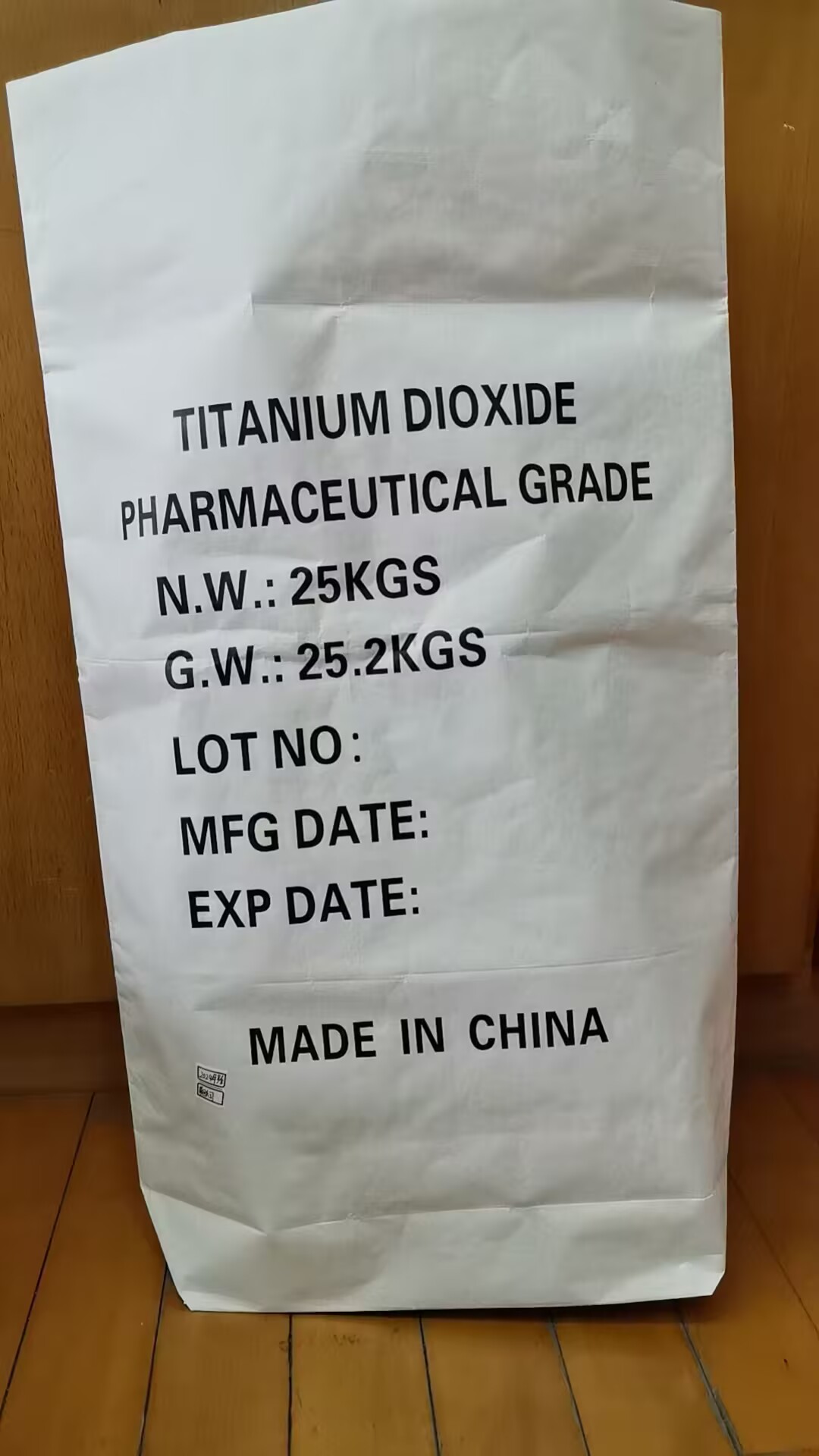
Chemically, it’s TiO₂—a white powder that’s insoluble in water, chemically stable, non-toxic, and packs strong achromatic power and hiding power. But not every TiO₂ works for fiber applications. The chemical fiber industry demands specialized grades with tight specifications on purity, particle size, dispersion, and crystal form.
The product in question, for example, has a purity (TiO₂ content) of ≥93%, extremely low iron content (≤0.010%), and a resistivity of ≥7000 Ω/cm. Those numbers matter because impurities and inconsistent particles are exactly what cause breakage in the first place.
Here’s the critical distinction: titanium dioxide for chemical fiber is almost always the anatase crystal form, not rutile. Why? Rutile TiO₂ has higher hardness, which means it’s more likely to wear down spinneret holes during melt spinning, directly causing filament breakage. Anatase is softer and much kinder to production equipment.

The Real Reason Fibers Break – And Where TiO₂ Comes In
Fiber breakage during spinning isn’t usually a single, dramatic event. It’s the accumulation of small problems:
-
Agglomerated TiO₂ particles create weak spots in the fiber.
-
Uneven dispersion is causing inconsistent polymer flow.
-
Abrasive particles are wearing down the spinneret holes.
-
Poor compatibility between TiO₂ and the polymer leads to interface voids
When you add poorly formulated titanium dioxide for chemical fiber to your polymer, you’re essentially scattering tiny rocks inside your fiber. They don’t bond—they create stress points. Under the tension of spinning, those points become breaking points.
But when the TiO₂ is properly engineered—with the right particle size (typically 0.15–0.35 μm for optimal scattering) and uniform dispersion—it integrates smoothly into the polymer matrix. The particles don’t create stress concentrations. They don’t clump together. And most importantly, they don’t cause breakage.
How Titanium Dioxide for Chemical Fiber Actually Works
Let’s break down the two main functions.
Primary Function – Delustering
The reason titanium dioxide for chemical fiber exists in the first place is to kill gloss.
Unmodified chemical fibers have smooth surfaces. When light hits them, it reflects directly back, creating that cheap, shiny look that consumers dislike. When you add titanium dioxide into the fiber, it distributes evenly throughout the interior and on the surface, creating a rough microscopic interface. Light then scatters diffusely instead of reflecting directly, achieving that soft, natural matte appearance.
The mechanism uses the refractive index difference between TiO₂ (about 2.7) and polyester (about 1.6). That mismatch—nearly two times—is what scatters light and kills shine.
Different dosages produce different effects:
| Matting Level | TiO₂ Addition Rate | Effect |
|---|---|---|
| Micro matting | ~0.07% | Very subtle sheen reduction |
| Semi‑matting | 0.1% – 0.3% | Moderate matte, balanced appearance |
| Full matting | 0.5% – 2.5% | Complete gloss elimination |
For most applications, adding 0.2% to 0.5% titanium dioxide for chemical fiber achieves a good matting and whitening effect, similar to natural fiber opacity, with no significant impact on fiber strength or elongation.
Secondary Function – Breakage Prevention (The Indirect Benefits)
Here’s where the anti‑breakage story gets interesting.
Properly formulated titanium dioxide for chemical fiber doesn’t just sit there—it actively improves the spinning process in several ways.
First, it prevents equipment wear. That’s counterintuitive, because TiO₂ particles can be abrasive. But high‑quality chemical fiber grades are engineered with low abrasion characteristics. Patented technologies exist specifically for producing low‑abrasion TiO₂ pigments for fiber applications, using metal halide treatments to create smoother particle surfaces. Less abrasion means spinneret holes stay clean and round longer, which directly reduces filament breakage.
Second, it improves dispersion uniformity. The biggest cause of breakage is particle agglomeration. When TiO₂ clumps, those clumps act as defect points. But when particles are properly surface‑treated and uniformly dispersed throughout the polymer, stress is distributed evenly. No weak spots means fewer breaks.
Third, it stabilizes the polymer interface. Different fibers require different grades of titanium dioxide for chemical fiber with different surface treatments. Inorganic coating surface treatments enhance light stability when TiO₂ is incorporated into the polymer. For UV‑sensitive nylon 6 and 66, anatase grades with a rigid inorganic surface form a barrier between the TiO₂ and the polymer interface, preventing photodegradation that would otherwise weaken the fiber over time.
One peer‑reviewed study on flexible continuous TiO₂ fibers found that a high‑pressure vapor pretreatment method prevented fiber matrix strength reduction caused by severe decomposition of organic ligands, essentially stopping fiber fracture before it could start. The same principle applies at a microscopic level in chemical fiber production: controlled incorporation prevents violent stress reactions that lead to breakage.
Market Context – Why This Matters Right Now
The numbers tell a clear story. Titanium dioxide for chemical fiber isn’t a niche product anymore—it’s a multi‑billion‑dollar industry serving the world’s largest fiber producers.
Global fiber production hit an estimated 1.1 billion tons in 2025, with chemical fibers accounting for over 65% of total output. Polyester fiber alone makes up roughly 70% of all chemical fiber production. That’s a massive addressable market for TiO₂ additives.
The global market for chemical fiber grade titanium dioxide is estimated at around USD 465 million in 2024, projected to reach USD 622 million by 2031, growing at a CAGR of 4.3%. Other estimates put the broader fibre-grade TiO₂ market reaching USD 2.13 billion by 2031.
What’s driving this growth? Two factors: rising consumer demand for high‑quality matte textiles, and increasing pressure on fiber producers to reduce production defects—including breakage. Every broken filament means wasted polymer, lost production time, and lower yields. In a competitive market, those inefficiencies destroy margins.
Real‑World Applications Across Fiber Types
Not all chemical fibers are created equal, and neither is titanium dioxide for chemical fiber. Different polymers require different addition methods and TiO₂ grades.
-
Polyester Fiber (PET)
Polyester is the 800‑pound gorilla of chemical fibers, accounting for about 70% of total production. In polyester production, TiO₂ is typically added to glycol and dispersed uniformly before being introduced during polymerization.
For polyester staple fiber (PSF), adding 1.5–2.0 wt% TiO₂ achieves full dull fibers, with additional benefits including improved UV resistance, aging resistance, and appearance. Uncoated anatase pigments are particularly effective for PET fibers.
-
Nylon 6 and Nylon 66
Nylon is more UV‑sensitive than polyester, which means the titanium dioxide for chemical fiber used in nylon needs special surface treatment. In nylon 6 production, TiO₂ is dispersed in caprolactam to participate directly in the polymerization reaction, ensuring uniform distribution into each monofilament.
Research from Donghua University has demonstrated that through amorphous insulating inorganic coating, the photocatalytic activity of TiO₂ ultrafine powder is significantly reduced, allowing fully matted polyamide fibers to maintain the same light resistance as bright fibers—without affecting yellowing resistance or color fastness.
-
Acrylic and Viscose Fibers
Acrylic fibers require TiO₂ dispersed in aqueous sodium thiocyanate, which then mixes into the polyacrylonitrile spinning stock. For viscose fibers, manufacturers have two options: integral addition (mixing TiO₂ suspension into the dissolution process) or the injection method (injecting TiO₂ suspension just before spinning).
Each method has trade‑offs in dispersion quality, equipment wear, and breakage rates. The injection method tends to produce better dispersion but requires more precise equipment calibration.
-
Polypropylene Fiber
For polypropylene, TiO₂ is primarily added in masterbatch form—a concentrated mixture pre‑dispersed in a polymer carrier. This approach minimizes dusting and improves handling, but masterbatch quality varies significantly between suppliers. Poor masterbatch dispersion is a leading cause of breakage in polypropylene spinning.
The Hidden Costs of Cheap TiO₂
Here’s something suppliers don’t always tell you: saving a few cents per kilogram on titanium dioxide for chemical fiber can cost you thousands in production losses.
When TiO₂ isn’t properly formulated, you get:
-
Spinneret wear. Hard, irregular particles erode spinneret holes over time, causing inconsistent filament diameter and eventual breakage.
-
Filter clogging. Agglomerated particles block filter components, requiring frequent changeovers and interrupting production.
-
Increased breakage rates. Each breakage event stops the line, wastes material, and requires operator intervention.
-
Variable matting. Inconsistent dispersion means some fiber sections are dull while others remain glossy—reject material.
The research confirms this. The application of titanium dioxide for chemical fiber as a matting agent affects fiber polymer performance, machine wear, filter component use cycle, silk breakage rate, and the physical and mechanical properties of the fibers themselves.
That’s why the dosage isn’t “the more the better.” Micro‑matting polyester chips use only 0.07% TiO₂; semi‑matting chips use 0.1–0.3%; full‑matting chips use 0.5–2.5%. The right amount balances the matting effect against process stability.
How to Choose the Right Titanium Dioxide for Chemical Fiber
Not all TiO₂ products belong on your production line. Here’s what to look for.
Particle Size and Distribution
The sweet spot for particle size is 0.15–0.35 μm. Particles above 0.5 μm reduce scattering ability for short‑wave light, hurting the matting effect. Particles below 0.1 μm become nearly transparent—light passes around them instead of scattering, losing the delustering ability entirely.
Crystal Form – Anatase vs. Rutile
For titanium dioxide for chemical fiber, anatase is almost always the right choice. Rutile has higher hardness, which increases spinneret wear and breakage risk during melt spinning. The exception? Some coating applications benefit from rutile’s superior UV stability, but for incorporated matting agents, stick with anatase.
Surface Treatment
Different fibers need different surface treatments. Uncoated anatase works well for PET. For UV‑sensitive nylons, inorganic coatings create a protective barrier between the TiO₂ and the polymer, preventing photodegradation. For high‑performance applications, advanced coating technologies can reduce photocatalytic activity while maintaining delustering performance.
Dispersion Quality
A good titanium dioxide for chemical fiber products disperses easily in water, glycol, sodium thiocyanate, or other relevant solvents. Poor dispersion is the single biggest predictor of breakage problems. If the TiO₂ doesn’t disperse evenly during compounding, it won’t disperse evenly in the fiber.
Purity and Impurity Control
Low impurity content ensures excellent dispersity and good fiber whiteness. Iron contamination, in particular, can cause discoloration and catalyze polymer degradation. The product referenced earlier has Fe content ≤0.010%—actually tested at 0.005%, which is well within spec.
Comparison – Cheap TiO₂ vs. Premium Chemical Fiber Grade
Let’s put this side by side.
| Characteristic | Cheap/Non‑Spec TiO₂ | Premium Chemical Fiber Grade TiO₂ |
|---|---|---|
| Particle size control | Loose, high variance | Tight 0.15–0.35 μm range |
| Crystal form | Mixed anatase/rutile | Pure anatase |
| Surface treatment | None or inconsistent | Fiber‑specific inorganic coating |
| Dispersion quality | Poor, prone to agglomeration | Excellent in water/glycol/solutions |
| Abrasion level | High—wears spinnerets | Low‑abrasion engineered |
| Breakage rate impact | Increases breakage | Reduces or neutral impact |
| Matting consistency | Variable, splotchy | Uniform, reproducible |
| Filter clogging | Frequent | Minimal |
| Cost per kg | Lower | Higher |
| Total production cost | Higher due to downtime | Lower over the full production cycle |
The cheap stuff looks good on the purchase order but terrible on the profit‑and‑loss statement.
FAQ
Q1: Does titanium dioxide for chemical fiber directly improve fiber tensile strength?
A: No. Properly formulated titanium dioxide for chemical fiber does not directly strengthen fibers. However, by ensuring uniform dispersion and reducing stress concentrations, it can indirectly lower fiber breakage rates and improve production consistency.
Q2: What is the recommended TiO₂ dosage to minimize fiber breakage?
A: There is no “anti-breakage” dosage. The key is uniform dispersion. For delustering purposes, adding 0.2–0.5% TiO₂ achieves a balanced matting effect without significantly affecting fiber strength or elongation.
Q3: Why is anatase preferred over rutile in fiber applications?
A: Anatase is softer than rutile, which reduces wear on spinneret holes during melt spinning. Rutile’s higher hardness can increase filament breakage risk. Using anatase ensures smoother processing and longer equipment life.
Q4: Can the same TiO₂ grade be used for both polyester and nylon fibers?
A: Not recommended.
- Polyester: Uncoated anatase works well.
- Nylon (UV-sensitive): Requires inorganic surface-treated anatase for stability and reduced photodegradation.
Always match the fiber grade TiO₂ to the polymer to ensure uniform dispersion and optimal performance.
Q5: How can I determine if TiO₂ is causing fiber breakage?
A: Check for these signs:
- Spinneret hole wear
- Filter residue or clogs
- Uneven fiber surface or inconsistent matting
Lab-based dispersion and particle analysis can confirm whether TiO₂ quality or formulation is the root cause before full-scale production.
Conclusion – Smart Specification Saves Production
Titanium dioxide for chemical fiber prevents fiber breakage when correctly formulated. The four key factors are: particle size, crystal form, surface treatment, and dispersion quality. Optimized TiO₂ ensures:
- Smooth, consistent spinning
- Minimal equipment wear
- High-quality, uniform fiber
Using low-quality TiO₂ may save costs upfront but leads to downtime, waste, and higher production expenses. Premium, fiber-grade TiO₂ improves yields, reduces costs, and stabilizes production.
Next step: Review your TiO₂ specification to reduce breakage and maximize efficiency. Contact our technical team for a consultation today.
