 Skip to content
Abstract:
Chemical Fiber Titanium Dioxide (TiO2) is a specialized grade engineered for synthetic fiber manufacturing, primarily serving as a matting and delustering agent in polyester, nylon, and polypropylene fibers.
Unlike general-purpose pigment grades, this technical variant features precisely controlled particle size distributions and surface treatments optimized for melt-spinning processes.
In the global textile industry, chemical fiber TiO2 enables manufacturers to produce fibers with controlled luster characteristics—from semi-dull to full-dull finishes—while enhancing UV resistance and thermal stability.
This article explores its technical properties, industrial applications, quality standards, and procurement considerations for B2B buyers in the textile and chemical fiber industries.
Grasping these specifications is essential for enhancing production efficiency and fulfilling quality standards in technical textiles, apparel fabrics, and industrial fiber uses.
Technical Properties and Manufacturing Process of Chemical Fiber TiO2
Core Chemical and Physical Characteristics
Chemical fiber grade titanium dioxide shows unique physical properties that set it apart from pigment or coating grades. The ideal particle size distribution is between 0.2 and 0.4 micrometers, a key requirement that avoids spinneret nozzle blockages during high-temperature melt extrusion while ensuring good light scattering. Particles larger than 0.5μm may cause clogging in precision spinning equipment, whereas particles smaller than 0.15μm might clump together and decrease matting efficiency.
The crystal structure predominantly uses rutile TiO2 rather than anatase, providing superior thermal stability at melt-spinning temperatures (260-300°C for polyester, 280-320°C for nylon).
Rutile’s refractive index of 2.76 produces ideal opacity by scattering light at fiber surfaces, which diminishes the typical glossy appearance of synthetic polymers. The difference in refractive index between TiO2 and polymer matrices (usually 1.54-1.58 for polyester) causes the light diffusion needed for matte finishes in commercial products.
Surface morphology plays an equally critical role. Chemical fiber grades require spherical or near-spherical particle shapes to ensure uniform dispersion in molten polymer streams.
Irregular particles cause flow disturbances and uneven luster distribution in finished fibers. Oil absorption values usually range from 15-25 g/100g, reflecting surface porosity that influences dispersant needs during compounding.
Production Methods and Quality Control
Two main manufacturing routes dominate TiO2 production from chemical fibers: the sulfate process and the chloride process. The chloride process, favored by leading manufacturers, produces higher-purity rutile with more precise control over particle size.
This method oxidizes titanium tetrachloride (TiCl₄) at temperatures between 1000 and 1400°C, resulting in particles with minimal residual impurities. Sulfate-process TiO2, although more cost-effective, necessitates additional purification steps to meet the ≥98% TiO2 content required for fiber applications.
Surface treatment constitutes a critical post-production step. Manufacturers apply silica and alumina coatings (typically 2-4% combined weight) through hydrolysis reactions.
These inorganic layers perform several roles: they prevent photocatalytic activity that might break down polymer chains, enhance dispersibility in hydrophobic polymer melts, and decrease moisture absorption. More advanced treatments might include organic coupling agents (such as silanes or titanates) to improve compatibility with particular polymer systems.
Quality control protocols involve laser diffraction particle size analysis (ISO 13320 standard), X-ray fluorescence to verify elemental purity, and electron microscopy to assess morphology. The consistency of these parameters from batch to batch directly affects the stability of the spinning process and the uniformity of fiber quality.
Primary Applications in Synthetic Fiber Manufacturing
Delustering and Matting Functions in Polyester Fibers
In polyester (PET) fiber production, chemical fiber TiO2 acts as the main matting agent, with dosage levels ranging from 0.3% to 2.0% by weight depending on the desired luster. Semi-dull fibers, commonly used in apparel fabrics, usually contain 0.3-0.5% TiO2, which decreases surface gloss by 40-60% compared to bright (untreated) fibers. Full-dull grades for home textiles and industrial uses include 1.5-2.0% TiO2, resulting in almost complete luster suppression.
The matting mechanism depends on light scattering at TiO2-polymer interfaces. When light hits the refractive index discontinuity, it experiences multiple reflections and refractions, which decrease specular reflection and produce a softer visual look. This optical effect also influences the fiber’s hand feel—higher TiO2 loadings slightly make the fabric stiffer and less drapable, which are important factors for fashion textile uses.
Nylon 6 and nylon 66 fibers need modified formulations because of their lower processing temperatures and distinct polymer rheology. Typical TiO2 loadings are between 0.2-1.5%, with close attention to dispersion quality to avoid defects in fine-denier products (below 1.0 dpf). Polypropylene fibers, which are used more frequently in technical textiles, incorporate 0.5-3.0% TiO2 for matting and UV stabilization in outdoor applications.
Functional Enhancement in Technical Textiles
Beyond aesthetic matting, chemical fiber TiO2 offers essential functional advantages in technical textile uses. Its ability to absorb UV rays helps increase the durability of fibers used outdoors, including geotextiles, agricultural covers, and automotive fabrics.
The rutile crystal form absorbs UV radiation under 400nm, stopping polymer chain scission that leads to yellowing and reduced tensile strength. Field research shows that adding 1.0% TiO2 can improve the lifespan of outdoor fabrics by 30-50% compared to fibers without treatment.
Thermal stability during melt spinning is another important performance criterion. Chemical fiber TiO2 needs to endure residence times of 5-15 minutes at temperatures above 280°C without causing polymer degradation or discoloration.
High-purity grades with optimized surface treatments maintain polymer intrinsic viscosity (IV) loss below 0.02 dL/g during processing, critical for maintaining mechanical properties.
Dispersion uniformity has a direct impact on fiber quality. Visible defects and weak points in finished fibers are caused by agglomerates larger than 10μm. Techniques for preparing master batches—such as pre-dispersing TiO2 in polymer carriers at concentrations of 20-40%—allow for consistent distribution during final spinning processes. To meet ISO 18473-1 standards, advanced manufacturers use twin-screw extruders equipped with high-shear mixing zones to ensure high-quality dispersion.
Comparison of TiO2 Dosage vs Fiber Luster Grades
| TiO2 Content (%) | Fiber Type | Luster Classification | Typical Applications |
|---|---|---|---|
| 0.0 | PET/PA | Bright (Trilobal) | Decorative textiles, lingerie |
| 0.3-0.5 | PET/PA | Semi-Dull | Apparel fabrics, sportswear |
| 0.8-1.2 | PET/PA | Dull | Home textiles, workwear |
| 1.5-2.0 | PET/PP | Full-Dull | Industrial fabrics, carpets |
| 2.5-3.5 | PP | Super-Dull + UV | Geotextiles, outdoor furniture |
Industry Standards and Compliance Requirements
International Quality Specifications
Chemical fiber TiO2 procurement must comply with various international standards. ISO 591-1:2000 sets the basic requirements for pigmentary titanium dioxide, such as TiO2 content (≥98%), rutile content (≥97% for fiber grades), and maximum water-soluble matter (≤0.5%).
However, fiber manufacturers usually set stricter internal standards: a particle size D50 ranging from 0.25 to 0.35μm, D90 below 0.6μm, and pH values between 6.5 and 8.0 to avoid polymer hydrolysis.
European markets require REACH (Registration, Evaluation, Authorization of Chemicals) compliance, which mandates suppliers to register substances exceeding one tonne each year.
Since 2021, nano-sized TiO2 particles (below 100nm) are subject to extra labeling requirements under EU cosmetics regulations. Chemical fiber grades usually surpass this size threshold. RoHS (Restriction of Hazardous Substances) compliance guarantees that heavy metal content—especially lead, cadmium, and mercury—stays below detectable levels (generally <5 ppm).
For fibers intended for food-contact applications (packaging materials, tea bags), FDA 21 CFR 73.575 establishes permitted usage levels and purity criteria.
This regulation restricts TiO2 to 1% by weight in finished articles and requires testing for antimony, arsenic, and lead extractables. Similar regulations are in place in China (GB 9685-2016) and Japan (JSFA standards), which demand documentation for cross-border trade.
Testing Methods and Quality Assurance
Supplier qualification protocols encompass thorough analytical testing. Oil absorption value testing (ISO 787-5 method) assesses surface area and porosity, with acceptable ranges of 15-25 g/100g for fiber grades. Values above 30 g/100g suggest excessive porosity, which increases dispersant needs and processing expenses.
pH measurement in aqueous suspensions (ISO 787-9) detects potential acid or base contamination that could accelerate polymer degradation. Acceptable ranges of 6.5-8.0 ensure chemical neutrality during high-temperature processing.
Dispersibility assessment uses laboratory-scale melt compounding followed by optical microscopy to quantify agglomerate size distribution—a critical predictor of production-scale performance.
Advanced suppliers supply Certificate of Analysis (CoA) documentation, which includes particle size distribution curves, XRF elemental analysis, and thermal stability data obtained from thermogravimetric analysis (TGA). Certification from third-party organizations such as SGS, Intertek, or Bureau Veritas enhances credibility for buyers who prioritize quality.
Commercial Considerations for B2B Procurement
Supply Chain and Packaging Standards
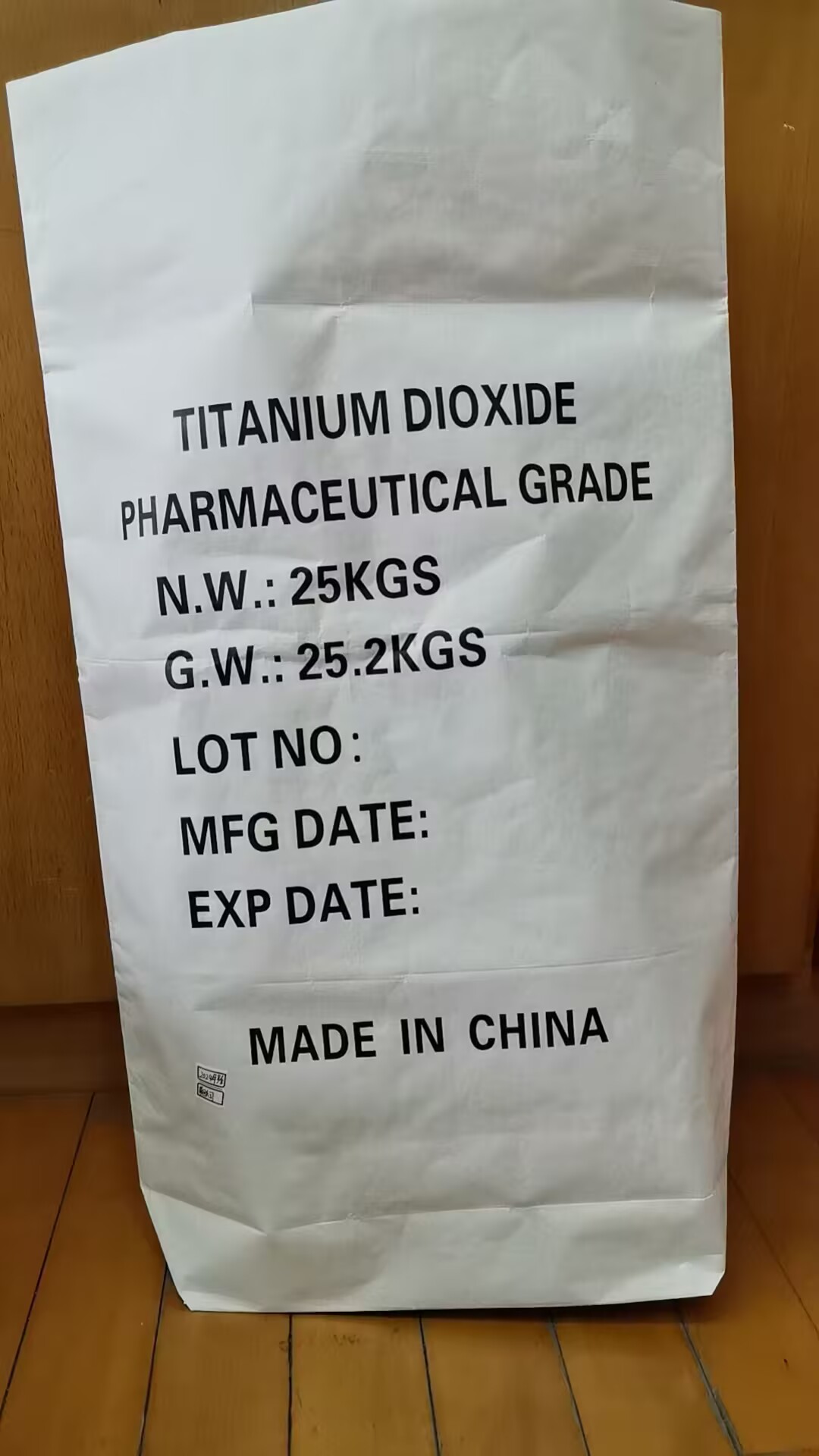
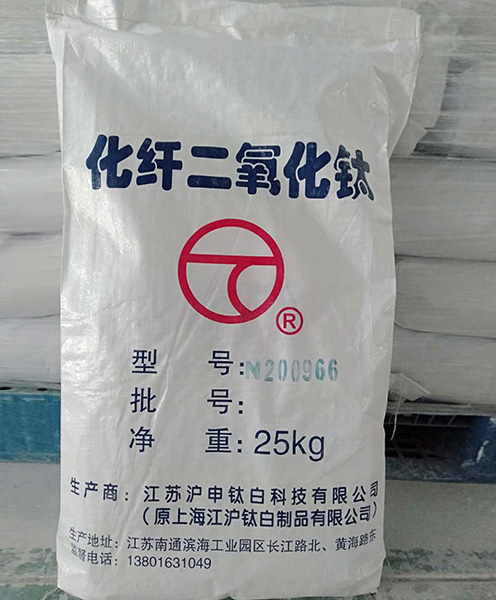
Chemical fiber TiO2 is usually shipped in 25kg multi-wall paper bags with polyethylene liners or in 500-1000kg flexible intermediate bulk containers (FIBCs) for high-volume customers. Packaging must keep moisture content below 0.5% to avoid agglomeration during storage and handling.
Desiccant packets and moisture barrier films safeguard against humidity exposure during ocean freight, especially for shipments to tropical regions.
When stored properly in dry, cool warehouses below 30°C, the shelf life is typically 24-36 months without significant loss of properties. However, extended storage might lead to minor compaction, which requires sieving before use.
Suppliers should provide lot traceability systems linking production batch numbers to quality test data, enabling rapid root-cause analysis if processing issues arise.
Logistics considerations involve the efficiency of container loading—around 20-22 metric tonnes per 20-foot container for bagged products, or 24-26 tonnes for big bags. Lead times from leading Chinese and European manufacturers vary from 4-8 weeks for standard grades, and can extend to 10-12 weeks for customized surface treatments or specific particle size requirements.
Cost-Performance Analysis
Pricing for chemical fiber TiO2 varies significantly based on specifications and order volume. Standard rutile grades range from $2,800-3,500 per metric tonne (FOB China). Premium grades with specialized surface treatments command $3,800-4,500/MT. Chloride-process material typically costs 10-15% more than sulfate-process equivalents. However, it offers superior consistency and lower defect rates.
The total cost of ownership goes beyond just the unit price. Using high-quality TiO2 with a narrow particle size distribution decreases the need for dispersant additives (usually $0.50-1.20 per kg of TiO2), which lowers formulation costs by $15-35 per tonne of finished fiber. Better dispersion quality also decreases spinning line downtime caused by nozzle cleaning—a hidden expense that can surpass $500 per hour in lost production.
The importance of supplier certification cannot be overstated. Certification in ISO 9001 for quality management guarantees uniform manufacturing processes, whereas ISO 14001 environmental certification tackles sustainability issues that are becoming more significant to textile brand owners.
Long-term supply agreements (12-24 months) with price adjustment clauses tied to titanium ore indices provide budget predictability while securing allocation during tight market conditions.
FAQ Module
Q1: What is the optimal particle size range for chemical fiber grade TiO2 to prevent nozzle clogging during spinning?
The optimal particle size distribution maintains D50 (median diameter) between 0.25-0.35μm with D90 (90th percentile) below 0.6μm. Particles exceeding 0.8μm significantly increase clogging risk in precision spinnerets with hole diameters of 0.2-0.4mm.
Equally important is the absence of large agglomerates—particles above 10μm should constitute less than 0.01% by volume. Laser diffraction analysis per ISO 13320 provides a reliable measurement, though suppliers should validate results with production-scale trials in your specific polymer system and spinneret configuration.
Q2: How does surface-treated TiO2 differ from untreated grades in terms of fiber dispersion quality?
Surface-treated TiO2 with silica/alumina coatings (2-4% by weight) demonstrates a 40-60% reduction in agglomerate formation compared to untreated material during melt compounding. The inorganic coating creates a hydrophobic surface compatible with polyester and nylon matrices, reducing interfacial tension and improving wetting.
Treated grades also suppress photocatalytic activity that could degrade polymer chains under UV exposure, extending fiber service life by 30-50% in outdoor applications. However, treatment adds $200-400 per tonne to material cost—justified for premium fiber grades but potentially excessive for commodity applications where basic dispersion suffices.
Q3: Can chemical fiber TiO2 be used interchangeably with paint-grade or coating-grade titanium dioxide?
Substitution is technically possible but commercially inadvisable. Paint-grade TiO2 typically features larger particle sizes (0.3-0.5μm D50) optimized for opacity rather than spinneret compatibility, increasing clogging risk by 3-5x. Coating grades often contain organic surface treatments incompatible with high-temperature polymer processing, causing volatile emissions and discoloration.
Most critically, paint grades lack the tight quality control on heavy metals and water-soluble impurities required for fiber applications—potentially introducing defects or regulatory compliance issues. While paint-grade material costs 15-25% less, the resulting production losses and quality problems typically exceed any savings. Specification-matched chemical fiber grades remain the cost-effective choice for reliable manufacturing.
Conclusion
Chemical Fiber Titanium Dioxide holds a crucial role in the production of modern synthetic fibers, allowing manufacturers to accurately manage luster features and improve functional qualities like UV resistance and thermal stability.
The technical specifications—especially particle size distribution, crystal structure, and surface treatment—directly influence the efficiency of the spinning process and the quality of the final fiber, turning supplier selection into a strategic procurement choice rather than a simple commodity purchase.
Successful implementation requires matching TiO2 quality specifications with end-use requirements: semi-dull apparel fibers demand different particle size profiles than full-dull industrial textiles, while food-contact applications necessitate stringent purity and regulatory compliance.
The cost-performance analysis extends beyond unit pricing to encompass total ownership costs, including dispersion additives, processing efficiency, and defect rates.
Emerging trends point toward nano-TiO2 formulations offering enhanced UV protection at lower loadings, and eco-friendly surface treatments using bio-based coupling agents to meet sustainability mandates from global textile brands.
As fiber manufacturers encounter mounting pressure to lower environmental impacts while preserving quality, the significance of advanced chemical fiber TiO2 grades will continue to expand strategically. B2B buyers ought to focus on supplier collaborations that provide technical assistance, reliable quality, and clear documentation to effectively meet these changing demands.
